Film Noir Lighting with Lighting Diagrams
April 12, 2011 by Darkman
Filed under All Articles, Featured, Film Noir Lighting, Film Noir Lighting Books, Film Noir Lighting Diagrams, Film Noir Photography, John Alton, Lighting Diagrams, Videos and Tips, Painting with Light, The Noir Style
Film Noir, emphasizing low-key lighting and unbalanced compositions and literally translated means “Black Film”. Not just the colors of the film but the sub-currents or undertones of the movie moods and expression. Film Noir is a visual style who’s roots are in German Expressionist cinematography, and typically set in the early 1940’s to the late 1950’s.
Film Noir is typically thought of as being a crime drama, usually involving a Femme Fatale(a women of questionable virtue). The femme fatale usually thought of as a danger to the hero or underdog, sometimes being the one thing that can bring the hero down, or elevate him to hero status. The hero is usually a private eye, police detective or cop.
Most classic period film noir movies were low or modestly budgeted, and low on film company equipment such as lighting. The American Film Noir was said to have come about through the idea of making use with what one has, or didn’t have and the need to accentuate the moods of the plot and the emotion to be conveyed by the characters. Low budget or low resources for equipment usually meant they had to make due with what they had and therefore became very inventive, especially in terms with the lighting.
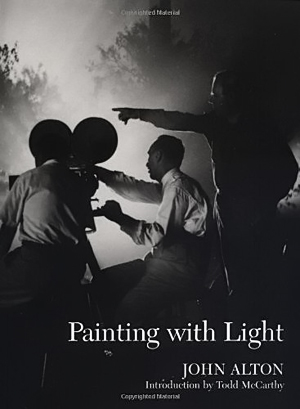
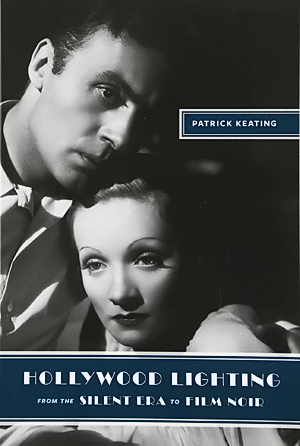
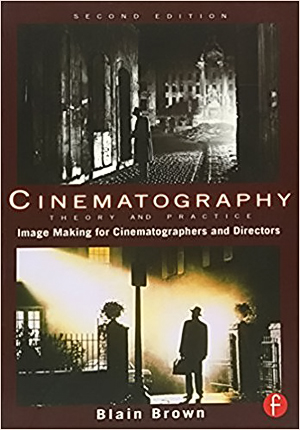
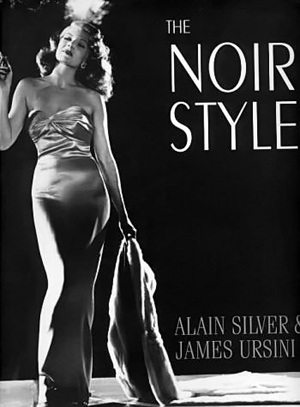
There are a couple great book on film noir, but for a film noir lighting book, there’s nothing like the film noir lighting bible entitled “Painting with Light” by John Alton. Another great reference for film noir movies and discussion of the style is the book “The Noir Style” by Alain Silver. More film noir books HERE.
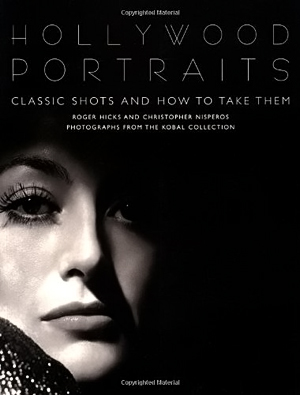
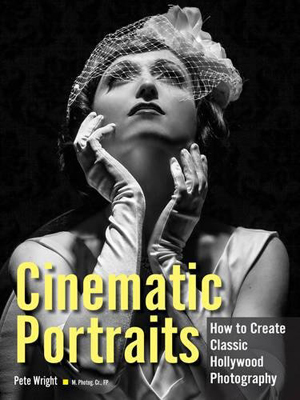
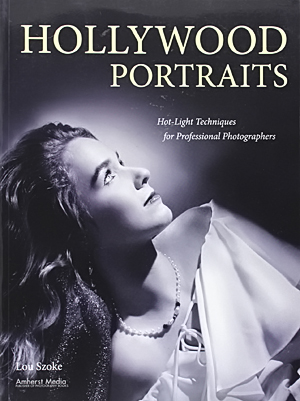
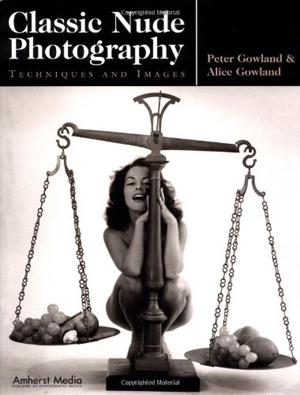
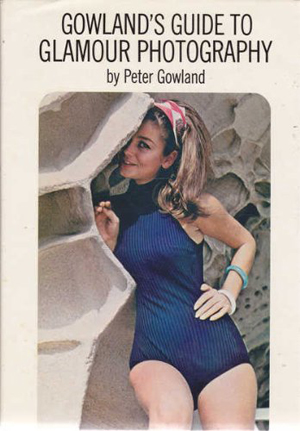
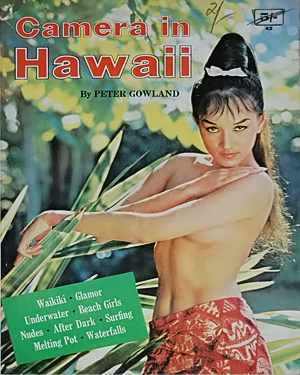
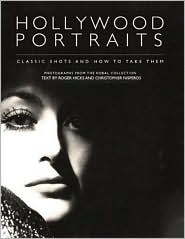
Film Noir Lighting became the hallmark of the Film Noir movie, and is seen in many types of photography today. Sometimes being confused with Hollywood Glamour Photography, Film Noir is usually of a much darker natural.
Some hallmarks of the film noir shot, or film are low key, low light scenes and skewed angles or low-angle, wide angle or dutch tilt type shots. All are ways to give disorienting or disfiguring effects as are images in mirrors.
The lighting is sometimes either stark dark or light contrasts as are the dramatic shadowing effects known also as the chiaroscuro style. Chiaroscuro is a style of light and dark paterning that came from Renaissance painting. One typical cliche and always notable scene type is the shadows of venetian blinds on the wall or across the face of the characters in the movie or photo.
Some classic examples of film noir lighting come from movies such as The Third Man, with the long cast shadows on the walls of the dimly lit streets along with the dutch tilted angle of the scene.
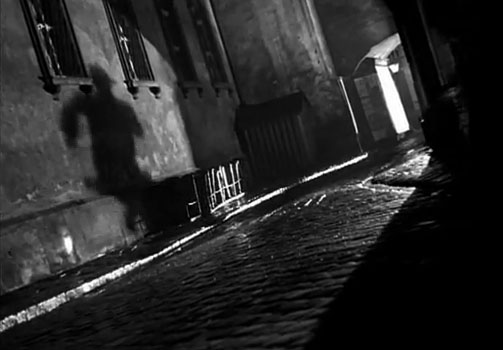
The Third Man – Long Shadows, Dark Streets, Running Man
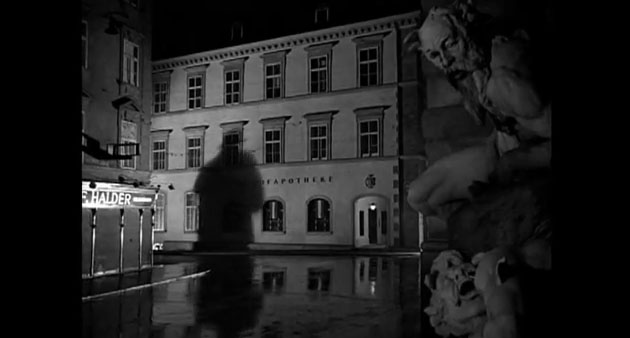
The Third Man – Long Shadows, Dark Streets, Balloon Peddler
Another great example of Film Noir lighting in a movie is High Sierra, in which the lighting was done to look as if lit by an oil lamp. The low lighting is low in this scene and gives away the feelings the two characters have for each other. The lighting is not as low as in criminal lighting where the light would be coming from the floor, but lower as in the height of the oil lamp itself to make it look realistic.
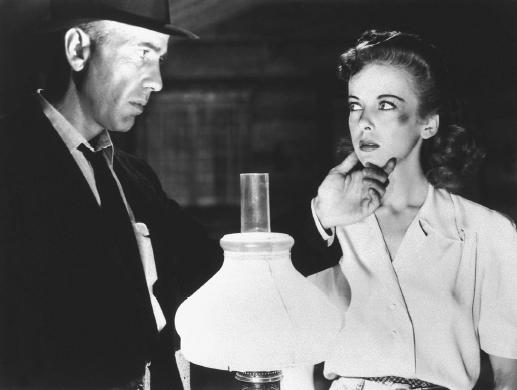
High Sierra with Humphrey Bogart and Ida Lupino
Another type of film noir imaging is silhouetting of the characters against a light background such as in the The Big Combo.
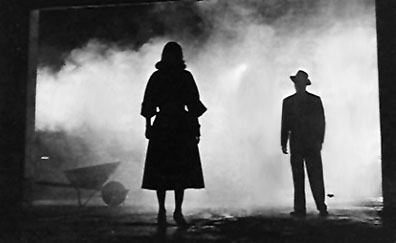
The Big Combo
Some examples of criminal lighting, I will use some of my own images for these. Typically low angle lighting pointing upwards, giving a stark evil feeling, along with a facial gesture can make all the difference in the world.
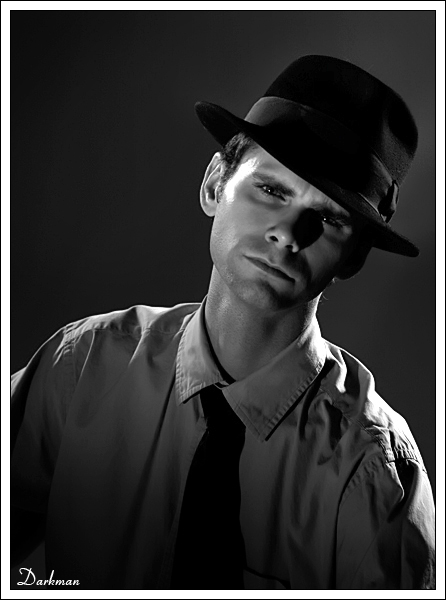
Guy Chapman, with Criminal Lighting and a Dutch Tilt
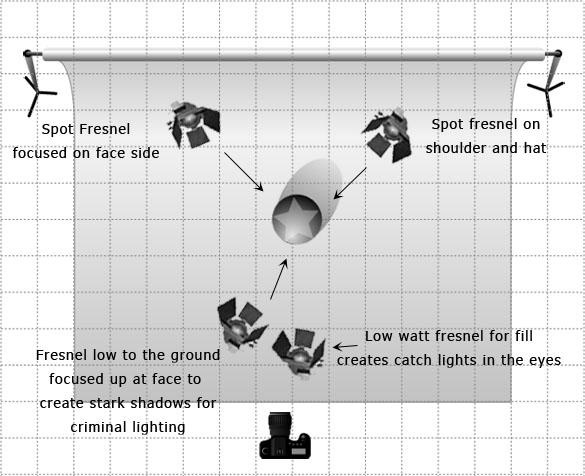
Film Noir Lighting Diagram for image of Guy #1
Long shadows on walls are a must in almost all film noir movies.
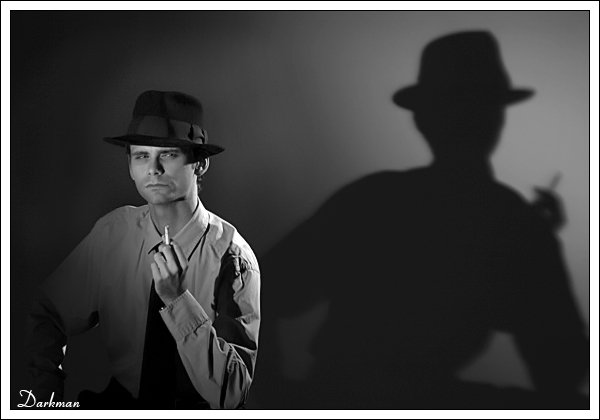
Guy Chapman with a long shadow on the wall
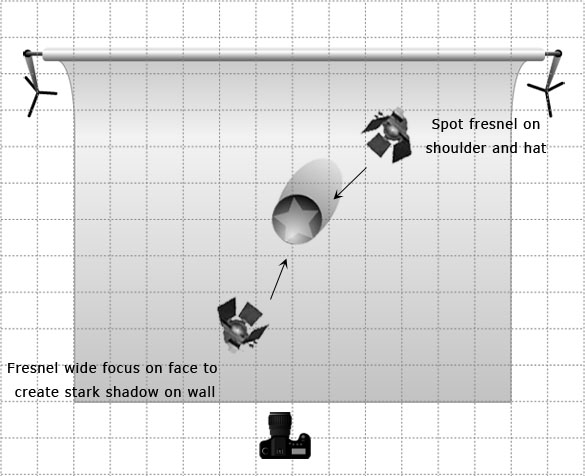
Film Noir Lighting Diagram for image of Guy #2
A tilted hat to create a shadow to hide the eyes can create a feeling of either mystery or sadness depending on the context.
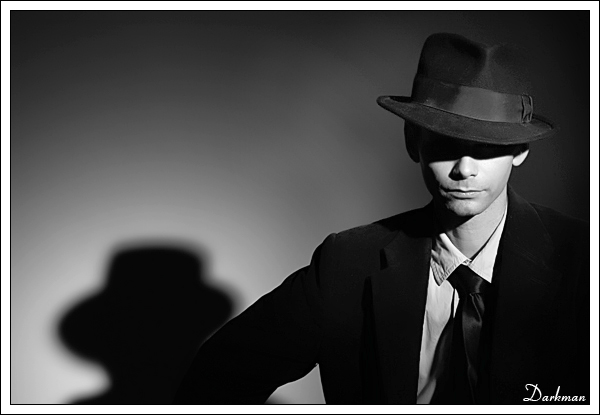
A tilt of the head to shadow and hide the eyes
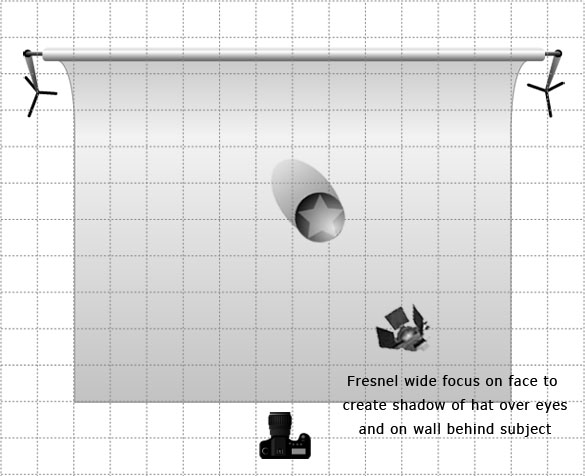
Film Noir Lighting Diagram for image of Guy #3
Sometimes a tilt of the camera can create a interesting or unusual effect. Used to disorient or convey disorientation, stress, dread or looming danger, the dutch tilt is a classic and simple to use technique.
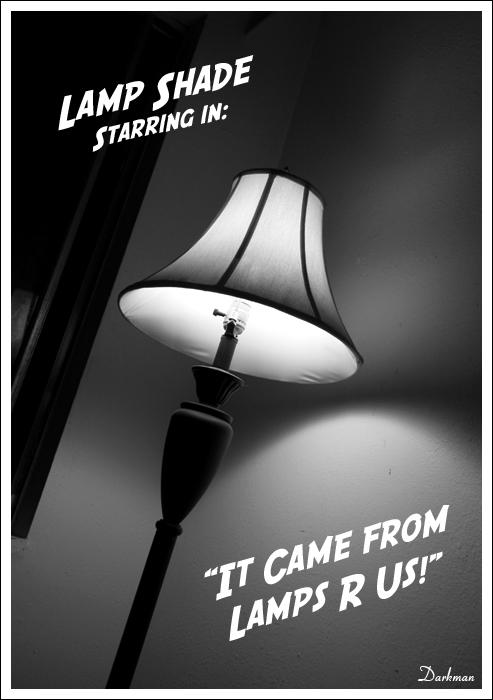
Dutch Tilt to create weird, disorienting and grotesque mood
Of course there’s also got to be the seductive Femme Fatale.
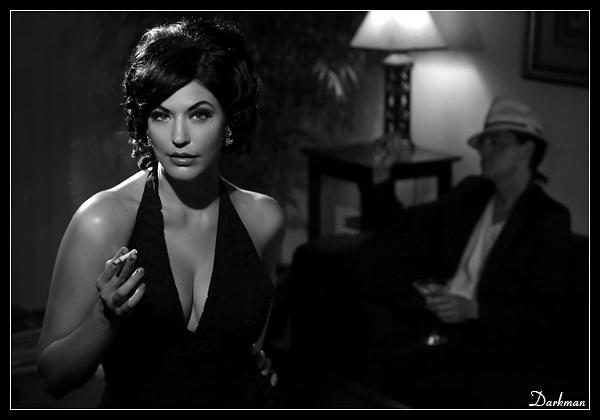
Film Noir Moll
A smoking gun is always nice.
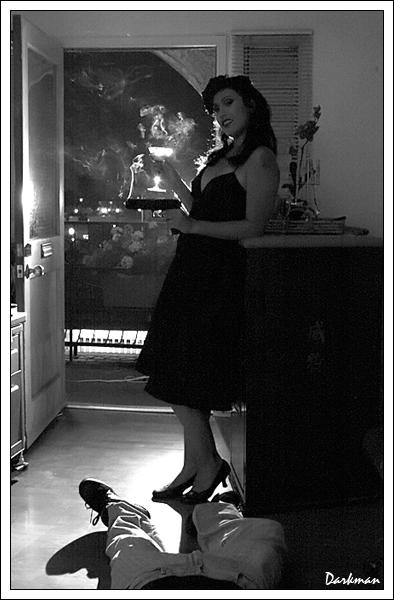
Smoking Gun backlit for effect
And then there’s the Hero or Protagonist, Me…Larry Darkman Clark.
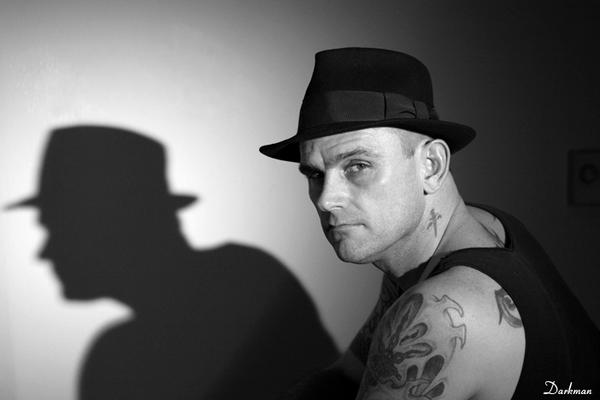
Larry Darkman Clark, Film Noir Lighting
I hope you’ve enjoyed this post on film noir lighting with the diagrams. Film noir has always been a passion of mine and there’s so much to it, it is in many of the movies we see today.
How was this post? Good? Bad? Or?
Please leave a comment below!
Check out the list of recommended
Hollywood Glamour Photography
Books and Videos Here